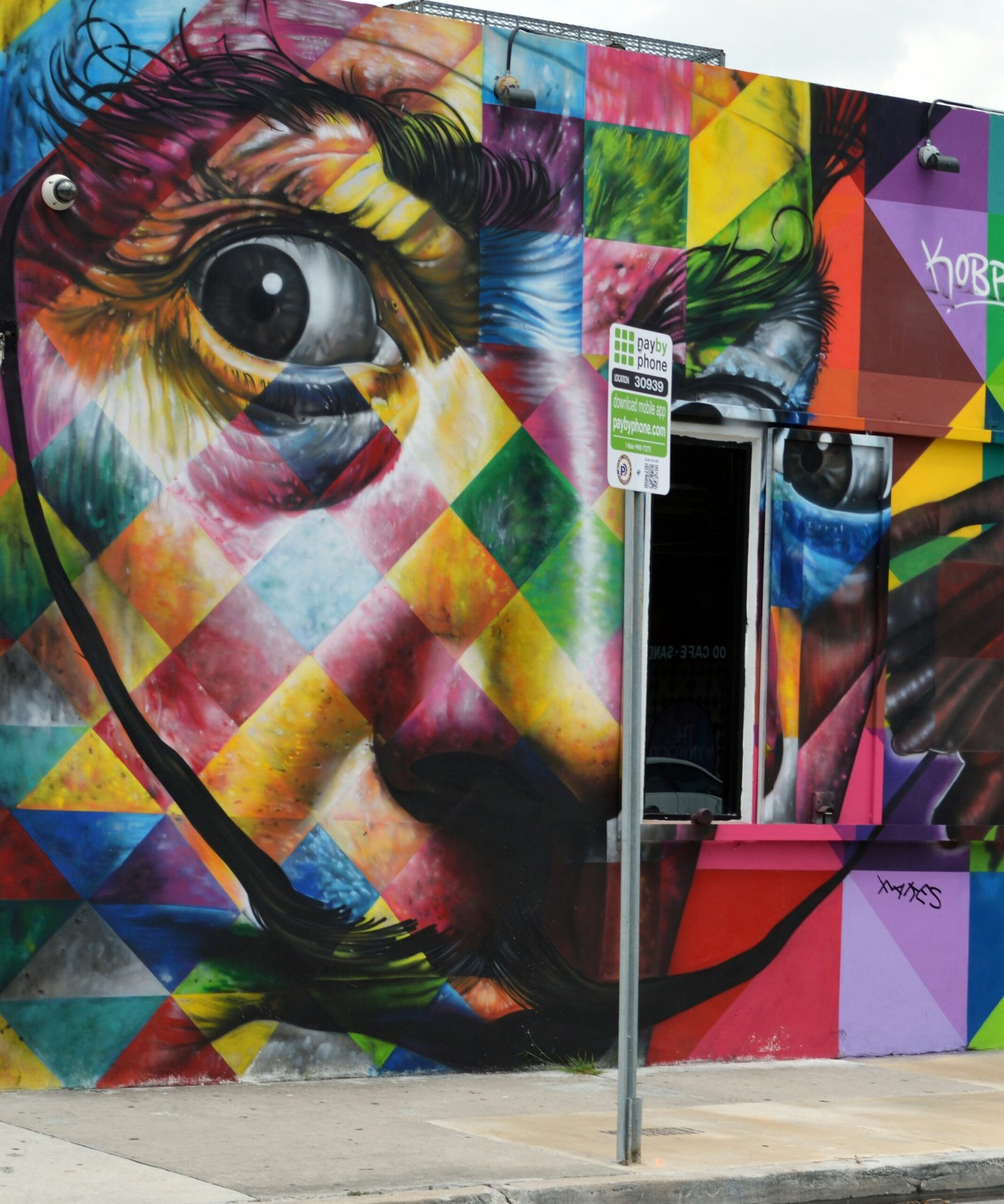
Once dismissed as a rebellious act of defiance, street art has risen from the underground to the forefront of contemporary culture. What was once a subversive expression of counterculture—executed under the cover of darkness and deemed an act of vandalism—is now celebrated as a legitimate art form that commands global recognition. No longer relegated to dimly lit alleyways or hidden corners, street art has infiltrated mainstream culture, gracing everything from urban landscapes to high-profile art fairs, fashion collaborations, and museum exhibitions.
Cities themselves have become sprawling, open-air galleries, where murals breathe life into neglected spaces, graffiti sparks political discourse, and every brushstroke or spray-painted flourish transforms concrete into a masterpiece. These vibrant, large-scale works transcend traditional art spaces, allowing creativity to exist without exclusivity or pretension. They serve as an ever-changing dialogue between artists and the world around them—reacting to political unrest, social justice movements, and cultural shifts in real time.
From the neon-soaked murals of New York’s Bushwick Collective to the politically charged walls of Berlin’s East Side Gallery and the kaleidoscopic alleyways of São Paulo’s Beco do Batman, street art speaks in a universal language of color, culture, and resistance. It is art for the people—unrestricted by gallery walls or auction houses—an organic, ever-evolving movement that challenges norms, reclaims public spaces, and reshapes the very architecture of our cities.
More than just decoration, street art is a cultural disruptor. It forces passersby to stop, think, and engage. It elevates underrepresented voices, critiques power structures, and celebrates the beauty of imperfection. In a world increasingly dominated by digital screens, street art remains a raw, tactile reminder of human expression—unfiltered, uncurated, and unapologetically bold.
Street Art as a Cultural Revolution
Street art isn’t just about aesthetics—it’s a cultural force that shapes narratives, breaks boundaries, and democratizes artistic expression. What began as an act of rebellion has evolved into an essential element of contemporary urban identity, with artists using walls as their canvases to reflect, challenge, and inspire.
A Platform for Voices Unheard
The beauty of street art lies in its accessibility. It transcends class, race, and background, providing a voice to communities often overlooked by the traditional art world. Murals become memoirs, graffiti transforms into protest, and each piece tells a story of resilience, resistance, or celebration. For underrepresented communities, these walls serve as unfiltered expressions of identity, preserving cultural narratives that might otherwise be lost in mainstream discourse.
In neighborhoods where historical injustices have shaped the urban landscape, street art acts as a reclamation of space. It highlights local heroes, remembers forgotten struggles, and fosters a sense of pride among residents. Many artists use their work to challenge stereotypes, creating powerful visuals that resonate far beyond their immediate surroundings.
The Marriage of Art and Activism
From Banksy’s politically charged stencils to Shepard Fairey’s bold statements, street art has long been a medium for activism. It calls attention to pressing social issues—inequality, climate change, human rights—through striking visual storytelling. Whether it’s a cry for justice on a weathered wall or a mural honoring cultural heritage, street art challenges perceptions and provokes conversation.
During times of crisis, walls become rallying points for change. Murals depicting civil rights leaders, feminist icons, and indigenous struggles remind the world of ongoing battles for justice. Cities like Beirut and Santiago have seen waves of protest art emerge overnight, serving as both historical documentation and a call to action. Unlike traditional activism, which often requires organized efforts, street art has the power to reach people immediately, confronting them with messages they might otherwise avoid.
A Communal Canvas
Unlike traditional gallery spaces, which can feel exclusive, the streets belong to everyone. Artists collaborate across cultures, borders, and artistic disciplines, creating pieces that reflect shared experiences. Street art festivals, like Berlin’s Mural Fest or Miami’s Art Basel, have turned entire districts into immersive exhibitions, proving that art isn’t just to be observed—it’s to be lived.
These events foster connections between local and international artists, allowing for a rich exchange of ideas. They also transform overlooked neighborhoods into cultural destinations, bringing tourism and economic growth to areas that were once neglected. More than just beautifying cityscapes, street art festivals cultivate a sense of belonging, inviting residents to take ownership of their environment and engage in dialogue through art.
At its core, street art is about breaking barriers—between artist and audience, between public and private space, between history and the present moment. It is a testament to human creativity’s ability to thrive in the most unexpected places, turning the mundane into the extraordinary.
The Cities that Breathe Art
Each city has its own artistic heartbeat, a pulse that vibrates through its walls and alleyways. Some have embraced street art as an integral part of their identity, transforming their urban landscapes into living works of art. From sprawling metropolises to tucked-away creative hubs, these cities have become destinations for those seeking to experience the transformative power of public art.
Street art is not merely tolerated in these cities—it is nurtured, celebrated, and protected as a vital element of cultural expression. Government initiatives, artist collectives, and local businesses often collaborate to ensure that murals and graffiti remain a prominent part of the city’s identity. Festivals dedicated to urban art continue to grow, drawing international talent and generating economic revitalization for neighborhoods that were once overlooked.
In these cities, walls do not separate—they connect. They tell stories of history and heritage, capture political unrest, and reflect the evolving identities of their communities. The rhythm of a city’s street art is ever-changing, with murals being repainted, new pieces emerging overnight, and forgotten alleys transformed into vibrant art corridors. Whether through large-scale, commissioned murals or raw, unfiltered graffiti tags, the artistic pulse of a city can be felt in every corner where paint meets brick.
These urban landscapes redefine what art can be—breaking free from the constraints of museums and galleries and existing in spaces where people live, work, and interact daily. Street art doesn’t ask permission; it claims its place, boldly announcing that creativity belongs to everyone. It is this rebellious spirit and unfiltered storytelling that continue to make these cities the beating heart of the global street art movement.
The Streets Are Calling
Street art is an invitation—to look closer, to question more, to celebrate the human experience in all its complexity. It transforms walls into open books, where stories of resistance, hope, and change are etched in layers of paint. Whether you find yourself standing before a Banksy in London, a Basquiat in Brooklyn, or a political mural in Mexico City, take a moment to listen. These pieces are more than just visuals; they are echoes of voices past and present, capturing the essence of the communities that birthed them.
Every city has a language, and its street art is part of its dialect. The walls whisper history, shout rebellion, and sing of future possibilities. They reflect the struggles of the marginalized, the aspirations of the dreamers, and the soul of the collective. To truly experience a city, one must not only walk its streets but read its walls, feel its textures, and engage with its ever-evolving canvas.
Art has always been a tool of revolution, and street art remains one of its purest forms. It demands your attention, defies erasure, and refuses to be ignored. So the next time you pass by a mural, resist the urge to walk by indifferently. Stop. Look. Absorb. And ask yourself—what is this wall trying to tell me? Because in the end, the streets are speaking. Are you ready to hear what they have to say?